Welcome to the Mathematical World!
Aida Yasuaki
Japanese Mathematician of the Edo Period
Aida Yasuaki (1747–1817) was a prominent Japanese mathematician of the Edo period, best remembered for his contributions to wazan (traditional Japanese mathematics). He emerged as one of the most innovative figures of his age, expanding upon earlier ideas of Seki Takakazu and further shaping the distinctive Japanese mathematical tradition. Yasuaki worked during a time when Japan was isolated from the West, yet his ideas paralleled developments in Europe in surprising ways.
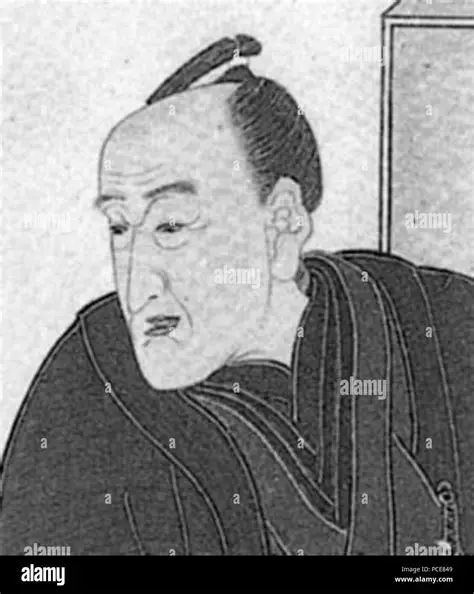
One of his major achievements was in the study of continued fractions and indeterminate equations, where he introduced methods that allowed more systematic treatments of problems involving large numbers. His works also dealt with algebraic equations, series expansions, and properties of magic squares, reflecting both recreational and theoretical interests. Among his most influential writings was the Sanpo Tenshoho Shinan (1784), where he organized mathematical knowledge with clarity and precision.
Aida was especially fascinated with the approximation of π. While Zu Chongzhi in China had previously established the famous approximation \(\frac{355}{113}\), Aida improved upon computational methods and introduced refined approximations using Japanese techniques of iterative calculation. His treatment of algebra also demonstrated parallels to polynomial factorization and solutions that echo Western approaches, though developed independently within the context of wasan.
Another notable feature of his work was his pedagogical contribution. He sought to make mathematics accessible, not only to scholars but also to common people. His emphasis on structured textbooks and logical order helped systematize Japanese mathematics, making his works widely studied among students and practitioners. By doing so, he ensured that Japanese mathematics continued to thrive even without direct Western influence.
Though after the Meiji Restoration Japanese mathematics eventually merged with Western science, Aida Yasuaki’s work remains a symbol of intellectual creativity during Japan’s self-imposed isolation. His legacy lies in blending traditional methods with innovative problem-solving, leaving behind a unique chapter in the global history of mathematics.

All rights reserved by the Mathematical Unity
Contact: +8801400044645
Email: mathematicalhorse1453@gmail.com
Our Discord Server: Mathematical Unity [Ulus Riyadiyat]